The Quiet Attack On Science: Subverting NIH Peer Review
Authored by anonymous current and former NIH workers with experience in peer review, this is an overview of all the changes to NIH's peer review over the last 18 months.

The recent publication of OMB’s proposed Regulation for Federal Financial Assistance (OMB-2026-0034) lays bare the administration’s goals of replacing scientific peer review with political decision-making; however, the dismantling of peer review at the National Institutes of Health (NIH) began earlier. We present here the cumulative effect of a series of changes to the processes that support rigorous and fair peer review of grant applications submitted to NIH. Rigorous and fair peer review benefits science, the scientific community, and ultimately the health of the American people. Since January 2025, NIH has implemented changes without the standard internal consultation, advisory council oversight, or input from the public. The changes include: 1. Disbanding the Center for Scientific Review (CSR) Advisory Council; 2. Consolidating all peer review at CSR; 3. Decreasing diversity and engagement of reviewers; 4. Eliminating review incentives; 5. Circumventing legal requirements; and 6. Minimizing scientific expertise. While each of these changes alone might appear benign, together they reduce the quality, rigor, and impact of peer review on NIH funding decisions and, therefore, the scientific merit of funded research. Furthermore, they steadily chip away at the foundation of a system that has supported advances in health for nearly 100 years. In this context, they are a part of the broader attacks by this administration on the NIH, other scientific agencies across the government, and the integrity and value of the entire US scientific research enterprise.
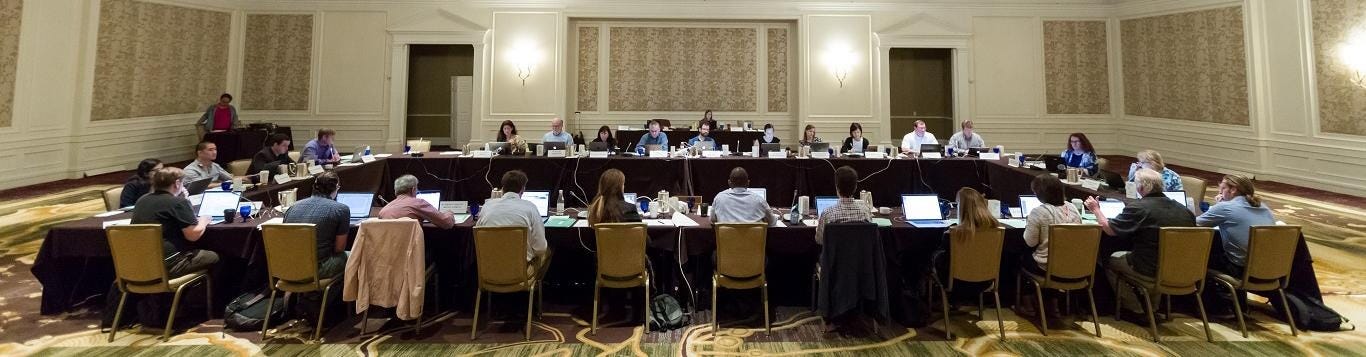
Photo credit: Center for Scientific Review’s Website
The Current Scientific Environment:
The NIH, located within the Department of Health and Human Services (HHS), conducts and funds research to enhance health and reduce illness and disability. An essential (and legally mandated) part of this process is fair and expert peer review of grant applications “free from inappropriate influences…so NIH can fund the most promising research.” NIH receives nearly 90,000 applications per year, each of which deserves careful consideration and expert evaluation before a funding decision can be made. This requires significant expertise from NIH staff to organize and conduct review panels as well as the participation of dedicated members of the scientific community to serve as peer reviewers. Over 25,000 expert volunteers serve on NIH review panels annually to ensure that grant applications undergo a rigorous and expert review that is fair and unbiased. In return, reviewers receive a $200 honorarium for each meeting day, but volunteer dozens of hours evaluating the applications before the meeting. As a comparison, a pharmaceutical company might pay an individual consultant $500-$1000 per hr to perform similar functions, making the NIH payment level a great value for the federal government and the public. As part of the stewardship of taxpayer dollars, reviewers play a crucial role in NIH’s efforts to produce the maximum return on investment in biomedical research for the American people.
This investment came under attack as the second Trump administration began to execute Project 2025. While the impacts of grant terminations, staff losses, and delays of critical review and Advisory Council meetings were apparent to the scientific community, the obstruction of essential NIH processes, especially as they relate to peer review, has been less obvious. Under the management of “Department of Government Efficiency” leader Elon Musk, Office of Management and Budget Director Russell Vought, HHS Secretary Robert F. Kennedy, Jr., and NIH Director Jayanta Bhattacharya, peer review and advisory council meetings were delayed or cancelled, stalling promising research on a wide range of devastating diseases. As we describe below, internal actions at NIH also undermine NIH peer review which, despite its flaws, has long been recognized as the world standard for assessing the merits of biomedical research proposals.
“A key reason U.S. science and innovation are the envy of the world is our scientific peer-review process that bases funding decisions on scientific merit, not political preference and partisanship.”
- Matt Owens CGOR president
Peer review in peril:
Eliminating Stakeholder Input
Background: Since 2011, the CSR Advisory Council (CSRAC) met regularly to advise the CSR Director on matters related to planning, execution, conduct, support, review, evaluation, and receipt and referral of grant applications. Composed of extramural scientists and ex officio NIH staff, the CSRAC guided initiatives to improve peer review and broaden the pool of reviewers. Their input helped develop more efficient review criteria, foster the next generation of reviewers, and ensure that study sections adapt to evolving and emerging areas of science.
Change: On April 1, 2025, NIH abruptly terminated this Advisory Council and severed its connection to the external academic research community. Extramurally-funded scientists lost a forum to provide input to the organization that now conducts 100% of NIH peer review.
Impact: Without an advisory council, CSR is now empowered to make drastic, unilateral changes to peer review. These changes have already disrupted effective peer review practices and alienated applicants and reviewers. The loss of this advisory council is one example of terminated or modified advisory councils that now include administration allies who lack expertise and credentials for those positions.
Consolidating Peer Review
Background: Prior to 2025, CSR conducted peer review of the bulk of applications submitted to NIH. Twenty-three additional NIH Institutes and Centers (ICs) also conducted peer review in scientific areas specific to their missions. An estimated 45% of the peer review staff at NIH worked at non-CSR ICs. The ICs primarily managed reviews of contracts, fellowship and career grant applications, and a broad variety of complex and mission-specific applications, including large multi-component research centers; CSR review centered on unsolicited research applications reviewed by topic-specific study sections and special emphasis panels experienced in reviewing hypothesis-driven research. While IC reviews often evaluated fewer applications and required considerably more staff time per review, they allowed for the additional attention needed to support large, highly-specialized multicomponent and cross-disciplinary projects that accelerate scientific progress and provide resources for newer areas of research. IC review staff worked with stakeholders to develop notices of funding opportunities (NOFOs), trained reviewers on the nuances of NOFO-specific review criteria, identified and recruited scientists with specific expertise, mitigated complex conflicts of interest for multi-center and large team projects, and conducted post-review analysis of NOFOs.
Change: On March 6, 2025, NIH leadership announced at an IC Directors’ meeting that all peer review would be consolidated at CSR. IC review staff were informed shortly thereafter at emergency all-hands meetings and the rest of NIH was notified later that afternoon. A complex reorganization that would usually take years of careful planning and include staff input and public comment was dispatched in a matter of months. Only a few people were involved in the decision: Lawrence Tabak, Matthew Memoli, and Noni Byrnes. Tabak and Memoli were successive acting directors of NIH, and Tabak and Byrnes left NIH soon afterwards, leaving their successors to implement this plan. The impetus to consolidate included a misleading presentation of data comparing CSR workloads to IC workloads based simply on application numbers which indicated that CSR was much more efficient. Although CSR’s consistent review of standard application types was indeed more efficient than tailored IC review, the efficient approach does not serve all review types equally well. Moreover, review quality should not be sacrificed in the name of efficiency. Notably, these major changes in organization and process took place without:
Internal discussion and accountability within NIH,
External discussion and accountability to the scientific community; NIH reorganization normally includes discussion with the relevant Councils and additional advisory groups and a public comment period, and
A plan to account for adequate review of all grant applications and contract proposals in the new structure.
These changes led to the loss of knowledge and expertise developed at the ICs, increased chaos, worsened the final consolidated workflow, and caused applicant and reviewer unease about the review process.
Impact: Consolidation of peer review of applications under one umbrella may have streamlined some processes. Unfortunately, the lack of consultation and rapid implementation timeline also caused several foreseeable and preventable negative consequences.
First, there is now a more standardized, homogeneous review of different solicited research announcements, regardless of project-specific scientific needs, considerations, and grant types. One size does not, and should not, fit all. Additionally, applications submitted to the same solicited funding announcement can be reviewed by different review panels, permitting inconsistencies in how these applications are considered for funding. This is suitable for independent, investigator-initiated projects with standard review criteria, but for specialized programs with additional review criteria, it hinders direct comparisons across applications by program staff in order to devise a funding plan for an entire program.
Second, significantly fewer review staff at NIH has increased the workload for remaining staff. Many IC review staff chose to leave or retire rather than move to CSR because it was initially unclear how many people CSR could absorb, positions offered included pay cuts and demotions, and IC review staff were given no agency or voice in the process. Eliminating large swaths of institutional knowledge reduced the efficiency and effectiveness of the review consolidation. New policies implemented to address the reduction in staff and increase in applications are reducing the depth and quality of application review (see below).
Finally, consolidation of peer review gives CSR the final authority on peer review policies. Prior to consolidation, the Review Policy Committee (RPC, composed of review program directors across NIH) advised NIH on review changes that then required IC Directors’ approval. NIH also solicited comments from IC advisory councils and the external scientific community before finalization. With consolidation, CSR is no longer obligated to seek policy change advice nor consent. Peer review changes appear as NIH Guide notices with little advance notice to NIH staff.
Decreasing Reviewer Engagement and Representation
Background: Peer review of applications for federal funding is mandated by statute, but how peer review meetings are managed and conducted is at the discretion of each agency and operational division. NIH review has been successful because of the extensive engagement with the broader scientific community. Service on an NIH review panel is an act of scientific citizenship and a valuable career experience. It is a unique forum for learning, networking with others, and hearing a wide breadth of opinions on the area of science in which a reviewer is directly engaged. While there are benefits to the individual, e.g., insight into the review process so that it can improve a reviewer’s grant writing, and considerations for promotion and tenure, reviewers take their responsibilities seriously. The role of the Scientific Review Officer (SRO) in ensuring adequate representation of expertise and diversity of viewpoints on the panel, managing real or perceived conflicts of interest, and providing meaningful and balanced feedback to the applicants is an important part of this process and builds trust between the NIH and the scientific community. Feedback received from NIH review panels is also extremely valuable to applicants precisely because of the thoughtful and thorough engagement of a diverse group of scientists that provides a framework for improvements to the proposed studies. Reduction in the level of engagement and representation reduces the value of the process for all stakeholders and ultimately impacts the value of the science being supported. Several recent small changes to how peer review is conducted are directed at overall engagement and representation.

Photo credit: Center for Scientific Review’s Website
Change: Diversity requirements removed from study sections. Congress, through the Federal Advisory Committee Act, directs chartered NIH study section and advisory council membership to be balanced with respect to the US population. NIH, under both Republican and Democratic administrations, interpreted this as population diversity and strived to recruit women and underrepresented minorities to review panels. Each year, CSR posted on its website “General Requirements for study section membership.” As recently as January 18, 2025, these guidelines stated, “There must be diversity with respect to the geographic distribution, gender, race, and ethnicity of the membership”. Following the presidential inauguration, CSR stripped the words “gender, race, and ethnicity” from these requirements, and SROs may no longer discuss their efforts to include demographic diversity on review panels. While SROs can and do continue to include women and underrepresented minorities, the message from the White House through DHHS through the NIH Director to CSR is clear: “Cure DEI.”
Impact: Others have written of the damage that Bhattacharya has done to research on chronic diseases, health equity, and the biomedical workforce. The homogenization of study sections is a less apparent tool to achieve that end. Less diversity on review panels will undercut the appreciation and evaluation of research on health disparities and social determinants of health, as well as overlooking important considerations for underrepresented populations in the workforce. In addition, reducing diversity can indirectly impair the career advancement of women and underrepresented minorities, leading to reduced diversity in the scientific community at large. As has been discussed elsewhere, there is ample evidence that reduced diversity of scientific teams reduces scientific innovation and outcomes.
“There must be diversity with respect to the geographic distribution, gender, race, and ethnicity of the membership.”
January 18, 2025
“There must be diversity with respect to the geographic distribution of the membership.”
February 2, 2025
- Diversity requirements for CSR study sections before and after the 2025 Presidential inauguration
Change: Modification of the ECR Program. CSR developed the Early Career Reviewer (ECR) Program to give junior scientists their first experience on NIH study sections with the goal of exposing them to NIH peer review practices incrementally so that they may be adequately trained for future review meetings. An added benefit is that it helps them understand how to write more competitive grant applications early in their careers. Therefore, ECRs were given light workloads as Reviewer 3 and SROs devoted additional time to training them. During the emergency measures following the government shutdown (October 1-November 12, 2025, when Congress failed to appropriate funds for fiscal year 2026), CSR paused the requirement to include ECRs on review panels, but reinstated it for the October 2026 Council round. However, CSR made significant changes, specifically eliminating the requirement that ECRs have a reduced review load.
Impact: While there may be some benefits to increasing the workload for ECRs – most notably increasing the likelihood that they will participate in discussions – changes to the ECR Program will reduce the incentive for junior scientists to sign up, as it is now tantamount to serving as regular ad hoc reviewers without the additional vetting process. It will also put a greater burden on those pursuing tenure, requiring them to take more time away from their research when their goal is to secure funding and establish their research programs.
Change: Elimination of in-person review meetings. Until the COVID-19 pandemic, NIH held many review meetings in-person. Reviewers traveled to the Washington, DC area or another city and discussed grant applications in hotel conference rooms. After long days of rigorous discussion, they gathered informally and made connections, began collaborations, and mentored early career scientists on the review panels. During the pandemic, by necessity, all review panels met by videoconference. In 2022, CSR announced that review panels which met three times annually could hold one meeting in person. This policy was short-lived. Cancellations of review meetings in early 2025 and uncertainties in rescheduling them, along with elimination of the budget for in-person meetings with the peer review consolidation, made videoconferencing the remaining option.
Impact: The ability to meet virtually can be considered a measurable advantage in terms of conserving time and expenses. The benefit of community, mentoring, and
in-person debate is a less tangible, but no less valuable commodity. Removing these interactions entirely can decrease the quality of the experience for the reviewers and the quality of the review itself. This, again, may also remove incentives for participation in NIH peer review. In the long term it also erodes the engagement and investment of the community in the review process. CSR has hinted at the return of one in-person meeting per year for chartered study sections. This would be a positive move towards improving reviewer engagement and discussion. Expanding in-person meetings to include large special emphasis panels will also benefit reviews of large, solicited research programs in which NIH makes substantial investment.

Photo credit: Center for Scientific Review’s Website
Change: Abbreviated Review Meetings. Following the government shutdown, CSR faced a logistical crisis. 424 review meetings in late 2025 were rescheduled for 2026. Additionally, many review meetings in February-March 2026, for grant applications submitted during the shutdown, were rescheduled. With concurrence from the IC directors, CSR employed Emergency Procedures for the January and May 2026 Council rounds.
These included shortening review meetings to one day for panels with 90 or fewer grant applications, discussing one-third of the applications instead of one-half, and summarizing the discussions using 3-4 bullet points rather than a full paragraph. Although these emergency procedures may have been necessary for timely review, they were intended to be a short-term solution. The Emergency Procedures were extended through the October 2026 Council reviews, and recently CSR leadership proposed indefinite continuation (presentation to the NIH IC Directors. March 26, 2026). While this proposal was well received by NIH leadership, there was significant objection from the internal and external communities and discussion of ~50% of applications will resume in the new fiscal year, although bullet point summary statements will remain.
Impact: The less discussion there is, the easier it is to reduce the importance of reviewers’ evaluations and scientific staff reporting of the deliberations, and the easier it is to obscure funding decisions by political appointees. The less feedback there is, the less improvement there will be to the end product, which is ultimately the science.
Terminating Continuous Submission
Background: By design and statute, reviewers are active members of the scientific research enterprise who serve as volunteers on NIH advisory panels. However, these reviewers are, first and foremost, scientists who compete for funding to sustain their own research programs. They volunteer for NIH advisory panels and spend much of their spare time reviewing grant applications to ensure that NIH funds the best science. In order to acknowledge this service and provide some relief to hectic schedules, in February 2008, NIH instituted a continuous submission policy whereby members of chartered study sections (later expanded to Advisory Councils), who typically serve three times per year, could submit their own grant applications one month after the standard receipt dates. Continuous submission served to recognize ”outstanding peer review service, and to minimize disincentives to such service.” Furthermore, it granted reviewers a grace period so that their reviewing and grant-writing activities did not overlap. At the September 2024 meeting of the CSR Advisory Council, the Working Group on Reviewer Recognition emphasized that peer review “is recognized as prestigious and a valued service to the community,” and proposed additional incentives for reviewers. One such incentive was to “Extend continuous submission privileges to standing members and chairs for the duration of the calendar year after they have rotated off their service.” That meeting was the final meeting of the CSRAC.
Change: On April 1, 2025 the CSRAC was dissolved and the initiative to extend continuous submission was abandoned. Not only was continuous submission not extended, but after 18 years, NIH announced that it would end this practice for all reviewers. In a reversal of the original intent of continuous submission, this notice disincentivized advisory panel membership. Buried in the same notice, NIH updated the late submission policy for all applicants who serve on review committees without explanation. The update shortens the window of qualifying service for late submission from two months before or after a receipt date to “four calendar weeks.” For the large proportion of review meetings that do not occur within four weeks of standard deadlines, this eliminates the benefit of late submission previously granted to reviewers as a token of appreciation.
Impact: Although the benefits of peer review service to the scientific community and to the individuals serving remain, incentives to serve a four-year term on a study section (especially for those who don’t need it for tenure) is removed - scientists may still serve as ad hoc reviewers and receive the same late submission allowance as study section members if they wish.
Eliminating HIV/AIDS review deadlines
Background: In 1988, responding to the AIDS epidemic in the United States, Congress established expedited review of AIDS applications in the Health Omnibus Programs Extension (HOPE) Act. To meet the new Congressional requirement of six months from application receipt to funding decision, NIH reviewed AIDS research grant applications on an expedited schedule, allowing important research to be funded three to four months faster than standard research grants. The shorter timeline allowed unsuccessful applicants to amend their applications and re-submit them for the next review cycle, thus accelerating the pace of AIDS research.
Change: On January 28, 2026, NIH announced the removal of AIDS deadlines. This change will affect over 2,000 AIDS and AIDS-related applications per year. Unlike significant changes to peer review in the past, NIH did not convene advisory panels, seek public comment, nor consult the NIH ICs with large AIDS research programs. While NIH ascribed this change to increased administrative burdens and lack of clear benefit of non-standard receipt dates, it presented no supporting data. Additionally, the plan for implementation failed to include a schedule for expedited review that will adhere to the Congressional requirement of six months from application receipt to funding decision.
Impact: It is likely that the elimination of receipt deadlines and expedited review puts NIH out of legal compliance. In addition, the change may actually increase administrative burden and workload for the already over-burdened review staff and volunteer peer reviewers as it moves more applications into the standard review timeline. Spreading application receipt dates out over time makes the workload more manageable. The effect on AIDS applications is not yet fully apparent. CSR leadership indicated that some AIDS study sections will be disbanded and the applications reviewed in other, non-AIDS-focused standing study sections. AIDS research has yielded benefits in many medical disciplines, so this is another blow for topics such as vaccines, LGBTQ health, cancer research, and international collaborations that have already been diminished by the administration and the NIH Director.
Devaluing Scientific Expertise
Background: NIH has been a global leader in fostering a culture of review where grant applicants and reviewers have anonymous but iterative conversations to advance science. As science has evolved, NIH has adapted by adjusting the scope of review panels, recruiting expertise in emerging areas, and incorporating viewpoints of previously excluded populations.
Change: Deemphasizing expert reviewer recommendations. Prior administrations and NIH directors avoided even the appearance of interference in peer review. The current administration, however, swiftly moved to undermine peer review in Executive Orders that ostensibly diminish expert recommendations in the grant award process. Further, the OMB Regulation for Federal Financial Assistance seeks to make the Executive Orders permanent. This interference is reinforced by the NIH Director’s Unified Funding Strategy (UFS), which encourages ICs to bypass peer review recommendations (priority and percentile scores) in their funding plans. NIH proposes to facilitate the UFS by removing priority and percentile scores from summary statements so that applicants, program officers, and IC Advisory Council members will be blinded to the reviewers’ assessment of overall impact.
Impact: Removing scores from summary statements reduces transparency in peer review, as it denies applicants the knowledge of how their applications were viewed and ranked by reviewers, and withholds valuable information from program staff who integrate these peer review decisions into their funding recommendations to IC directors. While ICs have used their discretion to fund grants out of score order, they have done so in a limited capacity to address gaps in their scientific portfolios and/or support emerging research areas. Greater influence by political appointees on funding decisions and pressure to circumvent score order elicit concern from reviewers that the value of their efforts and expertise has depreciated. This concern is largely dismissed by middle and upper management at NIH. Although scientists are under greater pressure to obtain funding that is compliant with the administration’s priorities, they also find the time to advise NIH on the best scientific investments for taxpayer dollars. The declining respect for their efforts will likely convince scientists to decline to review for NIH.
Pre-issuance review. “Federal agencies heads must designate one or more senior appointees to conduct a pre-issuance review of all discretionary awards.”
- Regulation for Federal Financial Assistance. § 200.205 (b)
Change: Misalignment of review staff expertise. In recent years, assignments of SROs to study sections, and promotions of SROs to review branch chief (RBC) positions within CSR have been determined irrespective of expertise (e.g., a neuroscientist may be assigned to a cardiovascular disease review branch). Therefore, although staff come to CSR with considerable experience in a field of science, that experience is no longer consistently applied to their peer review work.
In consideration of SROs for promotion, CSR intentionally avoids appointing RBCs to oversee branches that match their knowledge. Justification given to those competing for the RBC positions is that it is helpful not to be “distracted by the science,” and that leadership qualities are not expertise-specific. RBCs provide leadership for their branches, refer applications to study sections and assign study sections to SROs, and frequently negotiate with other RBCs to determine the best-fit study section for applications that may cross study section boundaries. In addition, RBCs have oversight of study section nominations to ensure that the panels have the appropriate expertise in their scientific topics.
Impact: While experienced SROs can put together a reasonable review panel for any topic, without deep expertise they can miss the nuances of the science and the program design that will maximize the utility of the review. This mismatch of staff expertise with study section topics reduces the quality of application referral and reviewer assignments. Although these may be “good enough,” they are not as accurate or as efficient as they would be with SROs and RBCs who know the science in depth. Combined with SROs and RBCs also often finding their way in a new field, there are gaps in the expertise overseeing peer review from multiple angles.
The Larger Attack on Science and a Call to Action
The Trump administration, since taking office on January 20, 2025, has systematically and consistently attacked the government agencies that support the US scientific research enterprise, including those dedicated to basic science (NSF), environmental sciences (EPA, NOAA), and human health (CDC, NIH). As has been covered elsewhere, fewer awards are being made to scientific research, research and training awards have been terminated, language in many awards has been rewritten to “align with administration priorities,” funding to certain institutions has been held hostage to pressure policy changes, notices of funding opportunities (NOFOs) have been reduced to a trickle, and the federal workforce that supports scientific research has been greatly reduced. The independence of scientific leadership and the mechanisms for community oversight are being reduced and marginalized. Many scientific leadership positions are vacant and advisory committees are being dissolved, disappearing through attrition, or being reconstituted with non-scientific membership. In addition, agencies are making changes that pave the way for funding decisions to be based on political favor or ideological alignment rather than scientific merit, including the changes to peer review described here.
This administration is determined to undermine the ecosystem that has made the United States scientific research enterprise the envy of the world. They are dismantling the systems including the very foundation of meritorious research: peer review. By doing so, they are paving the way for other countries to take the lead in biomedical research. Allowing these changes to occur without resistance makes us complicit in the result. As a harbinger of what could happen, since 2018, Australia has eliminated peer review panels, resulting in what is considered an “imminent threat to the future direction of Australian science.”
Let us uphold the foundation together. We ask that the scientific community join us in pushing back on ALL changes that impact the quality and quantity of science funded by your taxpayer dollars. Scientists can express their opinions to NIH and CSR, comment on the proposed OMB rule, and on the future Request for Information on removing scores from summary statements. While some have declined review invitations because of the politicization of NIH or the cuts to their funding, individual acts may go unnoticed. Strong measures by hundreds or thousands of reviewers, like petitions, joint letters, and even organized pauses in review service can encourage CSR to reconsider policy changes that disrupt the extramural community. As CSR leadership is in transition, this is the ideal time for collective action.
TAKE ACTION
1.) Contact NIH
General questions (web form)
Grants and funding questions (email)
2.) Report concerns to CSR
3.) Use this guide to Comment on the OMB rule (deadline July 13)
Thank you for this carefully assembled piece.
We’ve been approaching this spiral in terms of a loss of trust in the scientific community as a whole for some time now. Part of this is a limitation in scientific communication. Part is due to influence of industry on policy decisions. Part is also due to the spread of chronic disease despite the amount of money put into healthcare.
Now, none of these issues are a direct fault of the NIH or any specific scientific organization. And it is often where industries threatened by research in preventive medicine will fund campaigns to undermine that research. It is a confluence of these issues that has created widespread distrust of the scientific community riding on the back of a populist political wave that has swept across the US. That very wave has made any “left” leaning issue an enemy of the republic.
It is difficult to say where we are heading, but it doesn’t not look good for the future of scientific endeavor.